

Performance Analysis
/Treynor Ratio Calculator Guide
Treynor Ratio Calculator Guide
Learn how to evaluate excess return per unit of systematic market risk with the Treynor Ratio tool.
The Treynor Ratio Calculator measures portfolio excess return relative to beta (systematic risk).
This differs from Sharpe-like metrics that use total volatility. Treynor focuses specifically on market-related risk exposure.
High return can come from high market sensitivity rather than superior strategy. Treynor helps check whether return is efficient relative to beta risk taken.
How to Use the Tool
Use this workflow in Treynor Ratio:
1
Select Portfolio Positions
Build or choose your portfolio setup.
2
Choose Benchmark
Set benchmark used to estimate portfolio beta and context.
3
Set Risk-free Rate and Lookback
Define annualized risk-free input and rolling analysis window.
4
Calculate Treynor Ratio
Run the tool to generate rolling annualized Treynor chart.
5
Interpret with Beta Context
Read Treynor alongside beta dynamics to avoid false conclusions.
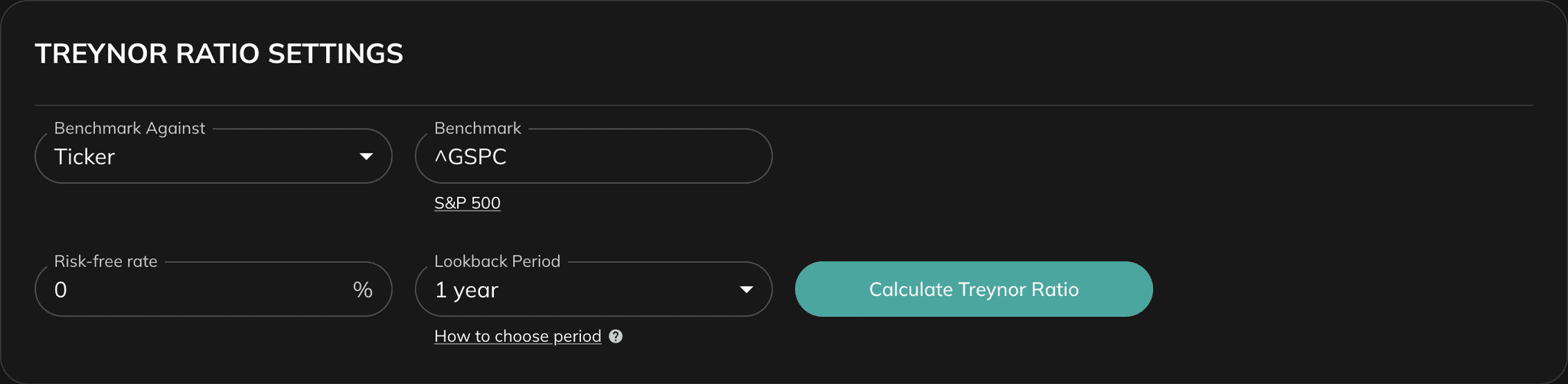
Tool Settings
Benchmark
Used for beta estimation and comparative interpretation.
Risk-free Rate
Annualized baseline subtracted from return.
Lookback
Rolling window for Treynor and beta estimation.
Results: Section-by-Section Guide
1. Rolling Annualized Treynor Ratio Chart
Shows return efficiency per unit of systematic risk over time.
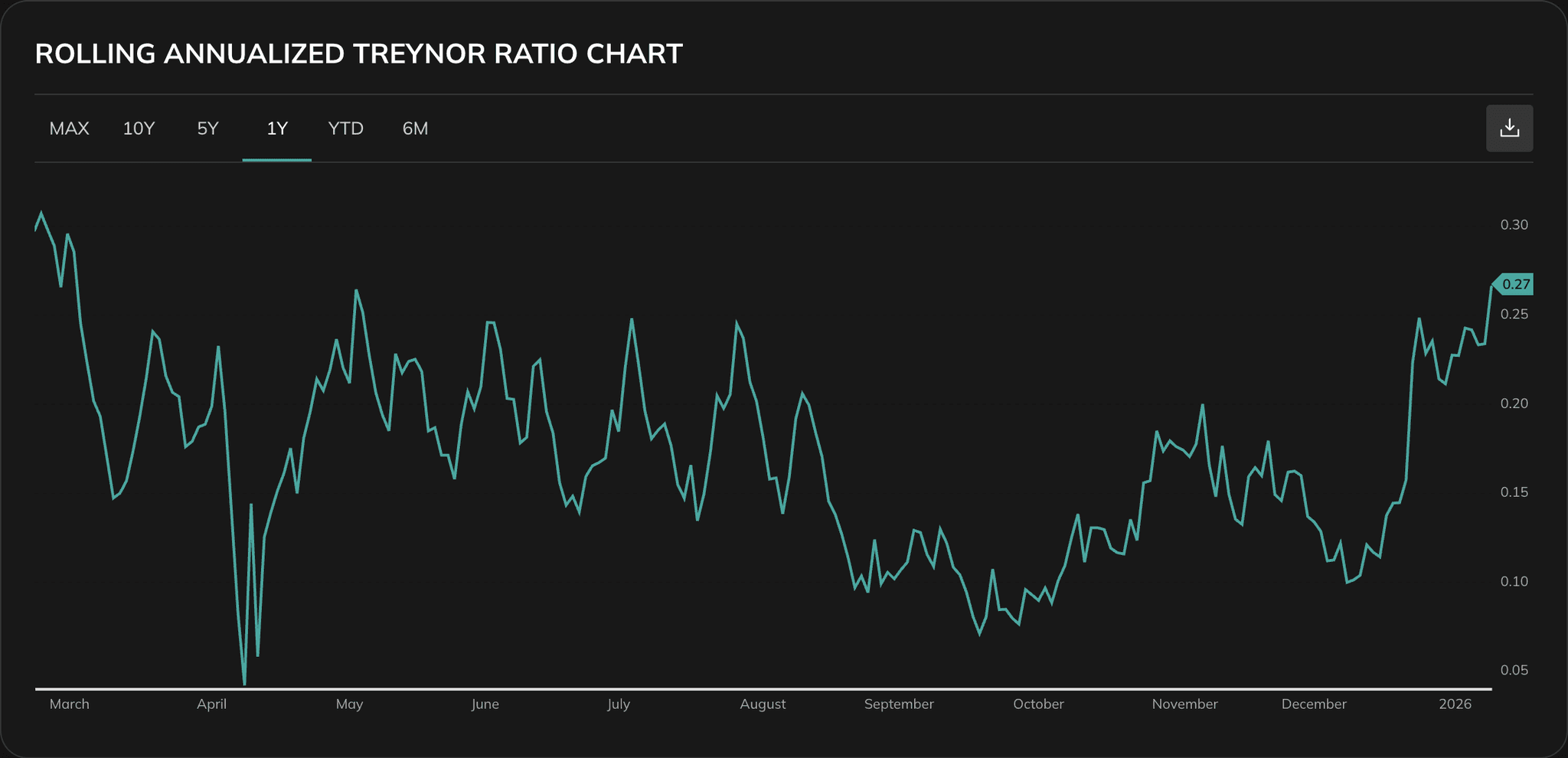
Interpretation highlights:
- Higher Treynor generally means better return per beta unit.
- Very low or unstable values can indicate weak beta-adjusted efficiency.
- Treynor alone does not classify an investment as good or bad; it is comparative.
2. Interpretation Section
The page text emphasizes that Treynor should be used with other tools and not as a stand-alone decision criterion.
Example
Portfolio A and B have similar return, but A has lower beta. A typically shows higher Treynor Ratio, indicating better compensation per unit of market risk.
Best Practices
Use benchmark that matches strategy
Beta quality depends on benchmark relevance.
Check beta regime shifts
Treynor can change when market sensitivity changes.
Pair with Sharpe/Sortino
Combine systematic-risk and total/downside-risk perspectives.
Avoid single-period conclusions
Use rolling context across different market regimes.
See also: Sharpe Ratio, Sortino Ratio, Beta