

Performance Analysis
/Sortino Ratio Calculator Guide
Sortino Ratio Calculator Guide
Learn how to evaluate excess return per unit of downside risk with the Sortino Ratio tool.
The Sortino Ratio Calculator divides excess return by downside deviation only.
Unlike Sharpe Ratio, Sortino does not penalize upside volatility. It focuses on harmful volatility below a selected minimum acceptable return (MAR).
Why This Matters
Investors typically dislike downside surprises, not upside moves. Sortino isolates downside risk and can provide a more decision-relevant quality signal.
How to Use the Tool
Use this workflow in Sortino Ratio:
1
Select Portfolio Positions
Choose or build the portfolio to analyze.
2
Choose Benchmark
Set benchmark for relative context in output plates.
3
Set MAR and Lookback
Define annualized MAR threshold and rolling window length.
4
Calculate Sortino Ratio
Run the tool to generate chart and comparative outputs.
5
Interpret with Downside Context
Review chart behavior and compare with broader risk-adjusted metrics.
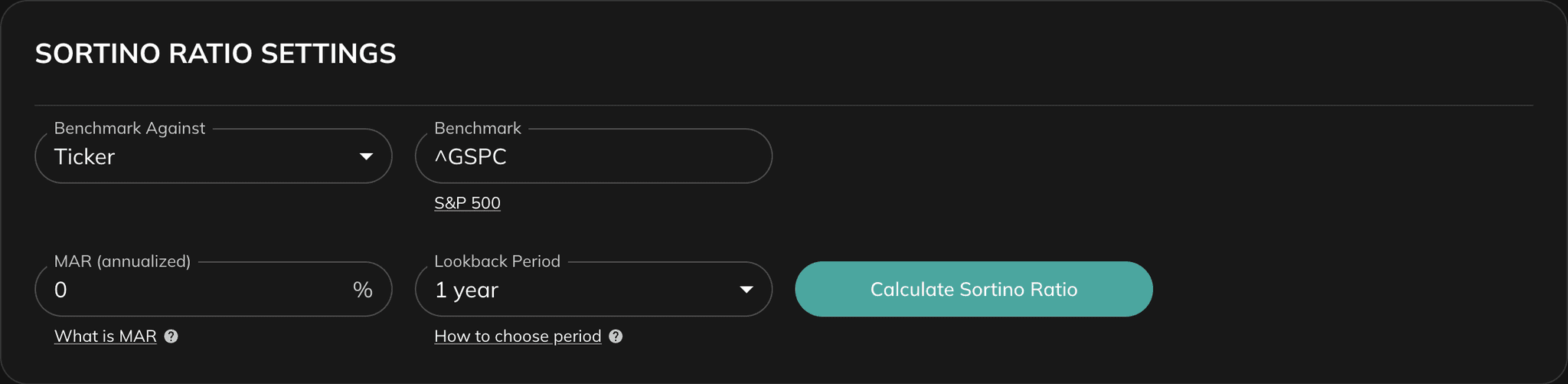
Tool Settings
Benchmark
Comparison baseline for relative reading.
MAR (annualized)
Minimum acceptable return threshold used for downside deviation.
Lookback Period
Rolling-window length for Sortino and downside deviation computation.
MAR guidance:
0%penalizes only negative outcomes.Risk-free-like levelgives conservative baseline.Target return(for example, 5%) aligns with personal objectives.
Results: Section-by-Section Guide
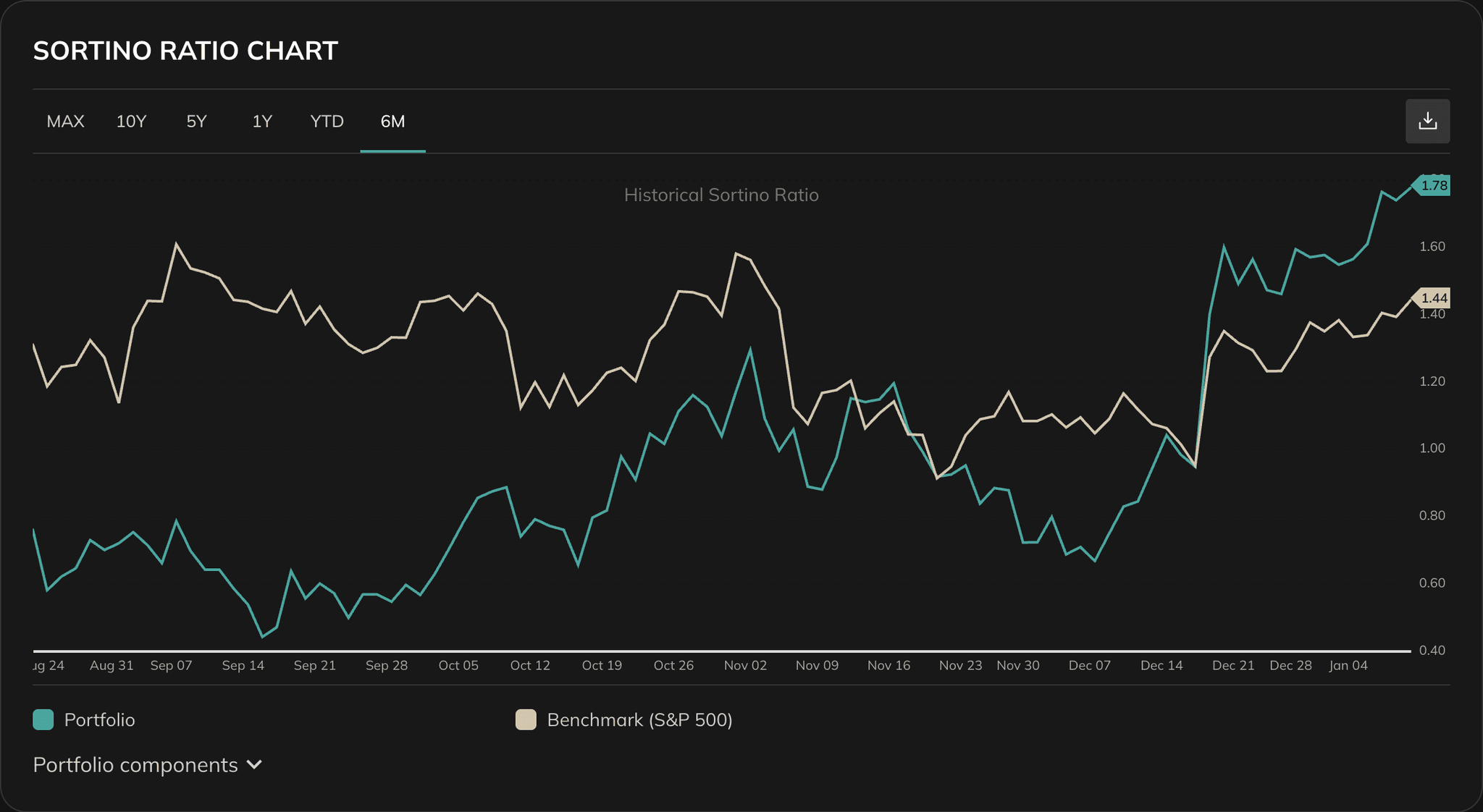
1. Sortino Ratio Chart
Shows historical Sortino behavior in rolling form.
Practical ranges:
- Negative: excess return below threshold; weak signal.
- 0 to 1: generally sub-optimal.
- Above 1: often acceptable.
- Above 2: often very good.
- Above 3: uncommon and strong.
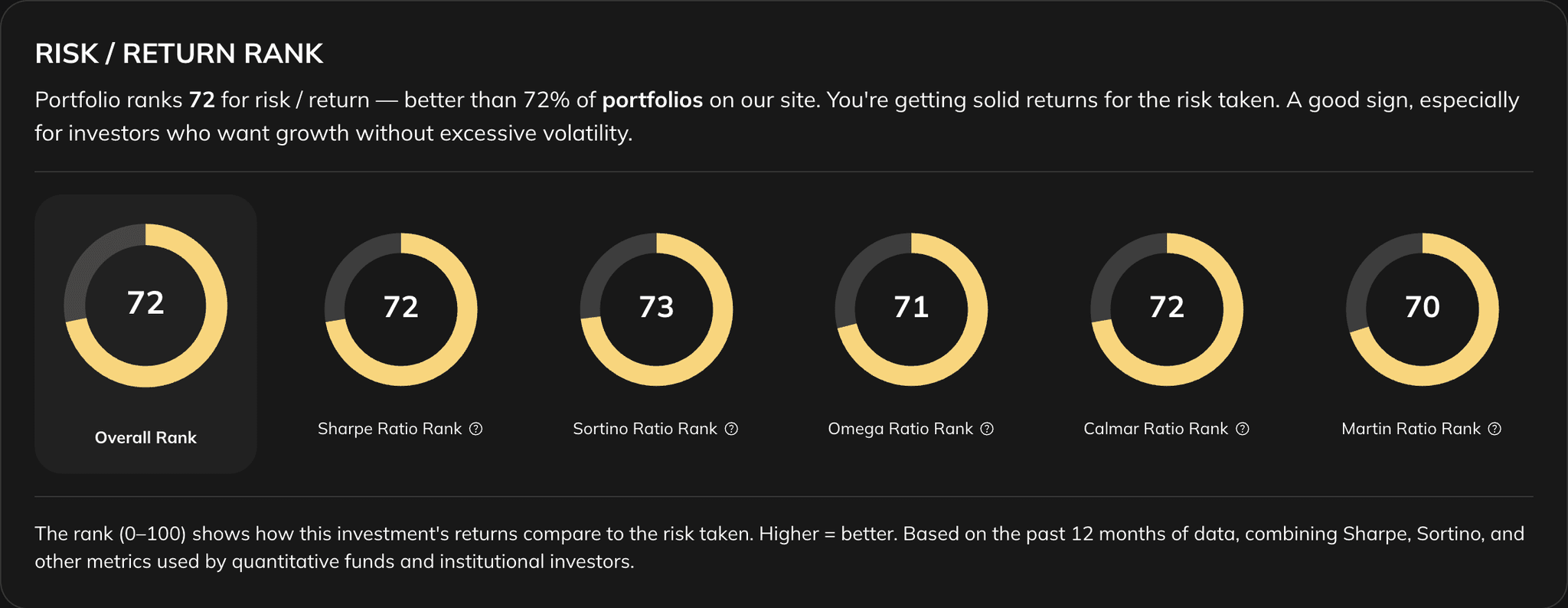
2. Portfolio Risk-Adjusted Rank
Adds relative context for metric quality.
3. Risk-Adjusted Returns Table
Cross-validates Sortino with Sharpe, Calmar, Omega, and related indicators.

Example
If two portfolios have similar Sharpe but one has fewer downside deviations below MAR, that portfolio will usually have higher Sortino Ratio and stronger downside-adjusted profile.
Best Practices
Choose MAR deliberately
MAR selection directly impacts Sortino values.
Use rolling analysis
Check persistence instead of one-point readings.
Pair with Sharpe and Omega
Compare total-risk and full-distribution perspectives.
Recalculate after strategy changes
Allocation changes can alter downside profile quickly.