

Performance Analysis
/Omega Ratio Calculator Guide
Omega Ratio Calculator Guide
Learn how to compare upside probability versus downside probability around a target return with the Omega Ratio tool.
The Omega Ratio Calculator compares returns above a target level (minimum acceptable return, or MAR) to downside outcomes below that same threshold.
Because it considers the full return distribution, Omega can capture information missed by metrics that focus only on volatility or one downside statistic.
Why This Matters
Omega helps assess gain-loss balance around your chosen return target, not just average return or standard deviation.
How to Use the Tool
Use this workflow in Omega Ratio:
1
Select Portfolio Positions
Choose or build portfolio composition first.
2
Choose Benchmark
Set benchmark for comparison context in result plates.
3
Set Target Return and Lookback
Define annualized target return threshold and rolling window.
4
Calculate Omega Ratio
Run calculation to generate chart, rank, and table outputs.
5
Interpret with Threshold Context
Read Omega values relative to your chosen target level.
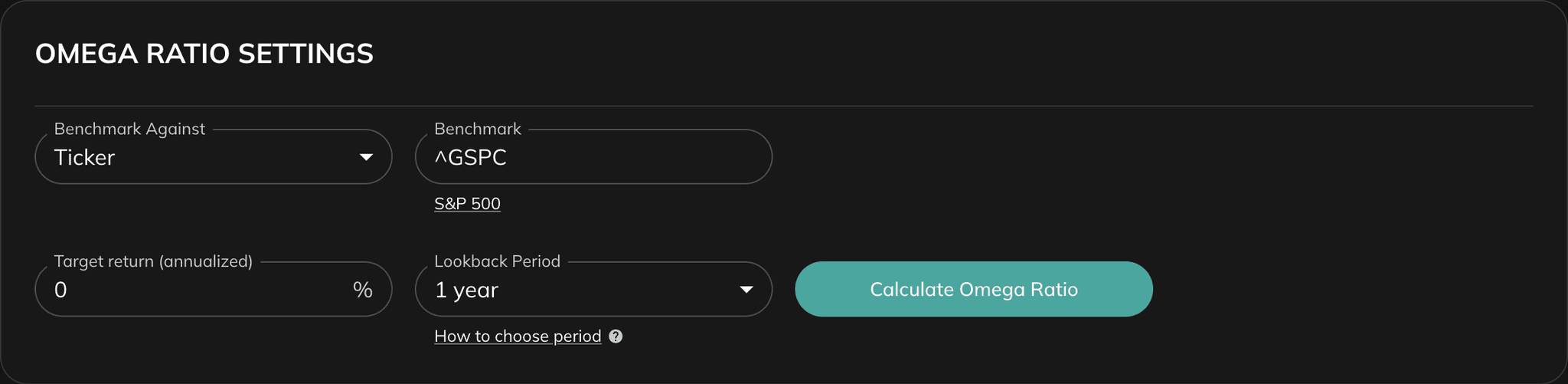
Tool Settings
Benchmark
Used for relative context in comparison outputs.
Target Return (annualized)
MAR threshold dividing favorable and unfavorable returns.
Lookback
Rolling window for Omega estimation.
Results: Section-by-Section Guide
1. Rolling 12-month Omega Ratio Chart
Tracks gain-loss balance dynamics through time relative to your target threshold.
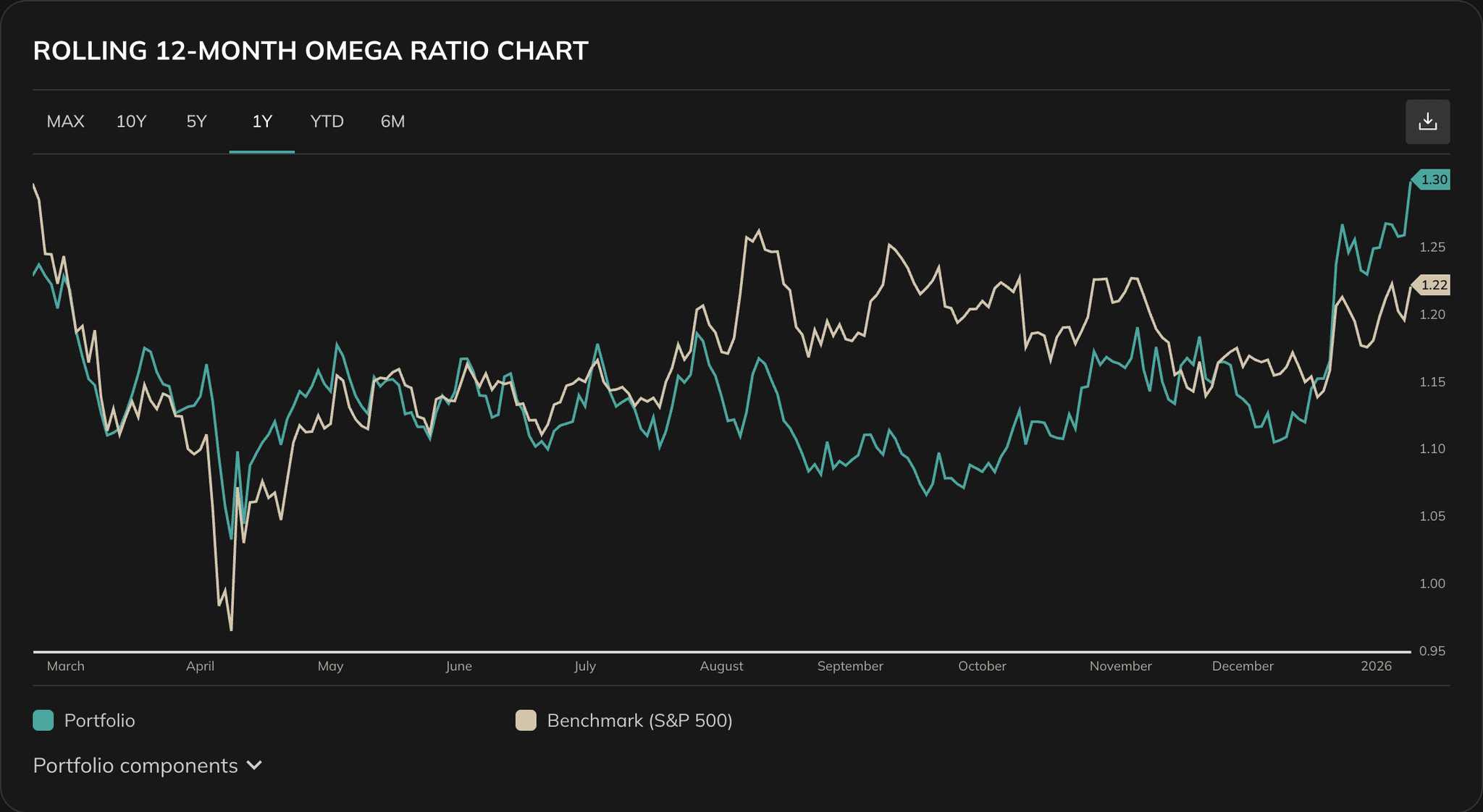
How to interpret values:
- Greater than 1: favorable risk-adjusted profile around target threshold.
- Equal to 1: balanced upside and downside around threshold.
- Less than 1: downside side of distribution dominates.
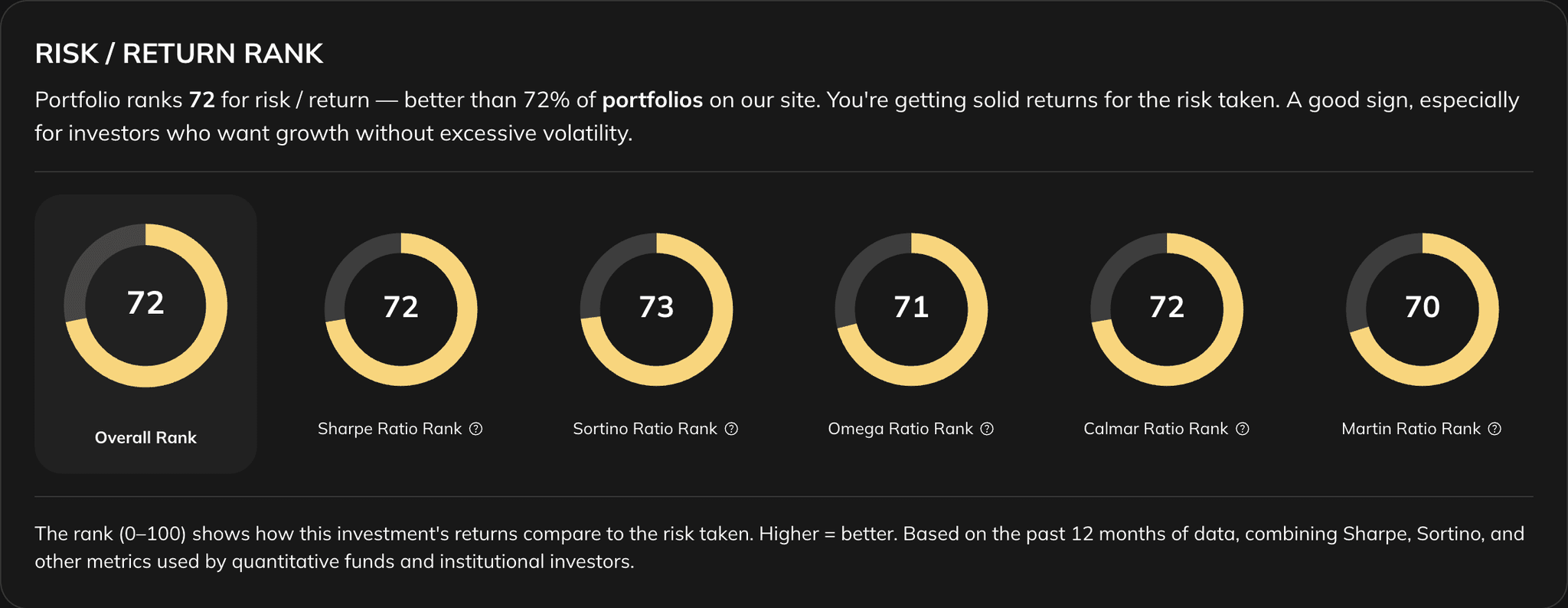
2. Portfolio Risk-Adjusted Rank
Use rank context to understand if Omega quality is strong relative to broader universe.
3. Risk-Adjusted Returns Table
Cross-check Omega with Sharpe/Sortino/Treynor/Calmar and other metrics.

4. Interpretation and Limits
The tool text highlights practical caveats:
- Results are sensitive to selected target level.
- Omega is useful for tail-risk context but not a complete risk model.
- Outliers can distort values.
- Historical data quality and regime changes matter.
Example
If Portfolio A and B have similar return, but A has more outcomes above a 5% annual target and fewer deep downside outcomes below it, A should show higher Omega Ratio.
Best Practices
Test multiple target levels
Different MAR choices can change conclusions.
Validate with other ratios
Compare Omega with Sharpe, Treynor, and Calmar.
Watch regime changes
Recalculate after volatility regime shifts.
Avoid single-metric decisions
Pair ratio insights with portfolio fundamentals and objectives.