

Performance Analysis
/Portfolio Analysis Tool Guide
Portfolio Analysis Tool Guide
Analyze portfolio performance, risk, income, and diversification in one complete workflow.
Portfolio Analysis lets you examine your portfolio's performance, risk, and structure in depth. You can backtest returns, evaluate drawdowns, and benchmark results against major indices. Whether you're building a new portfolio or reviewing an existing one, you'll get a clear view of what's working and what's not.
Go beyond basic performance metrics:
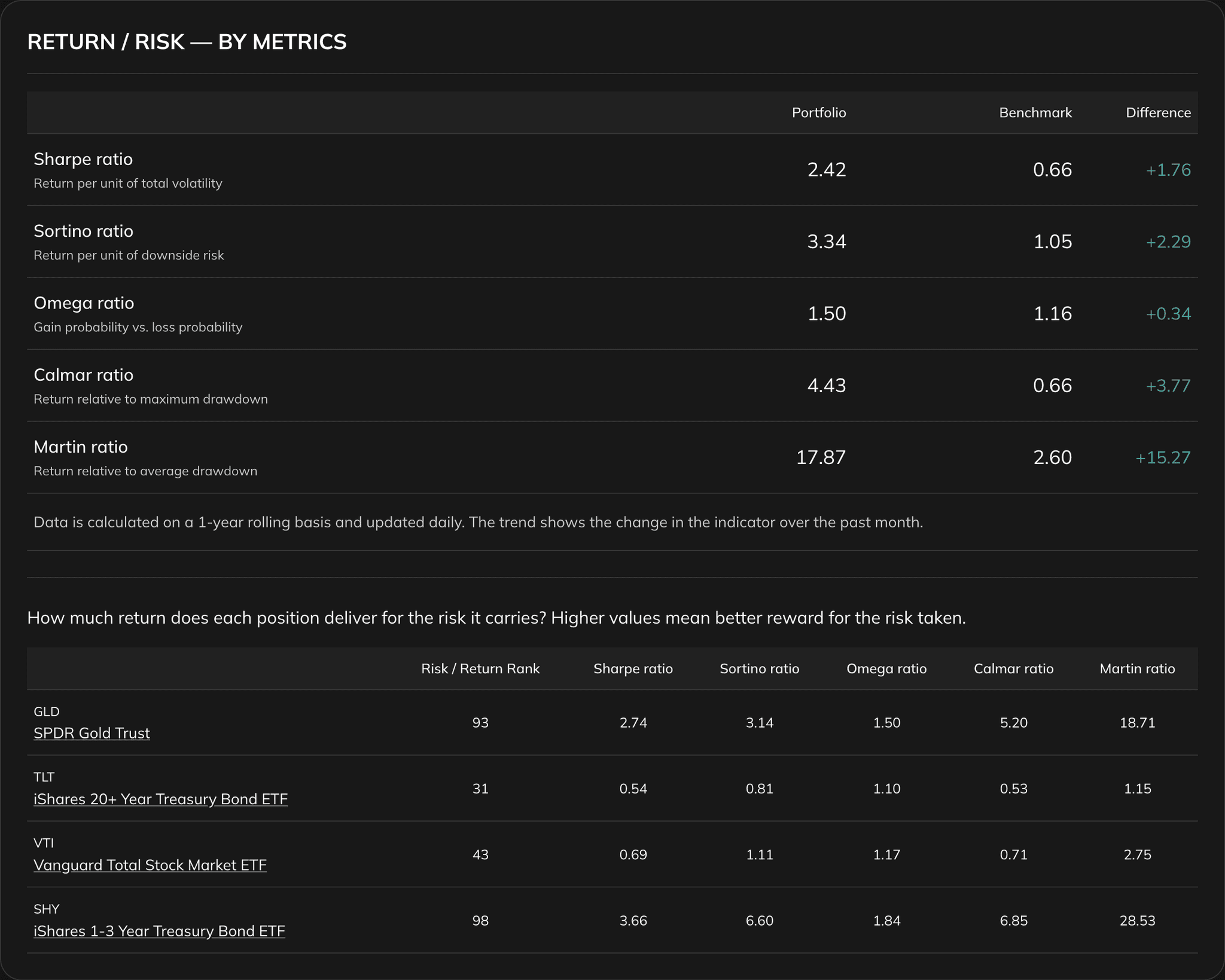
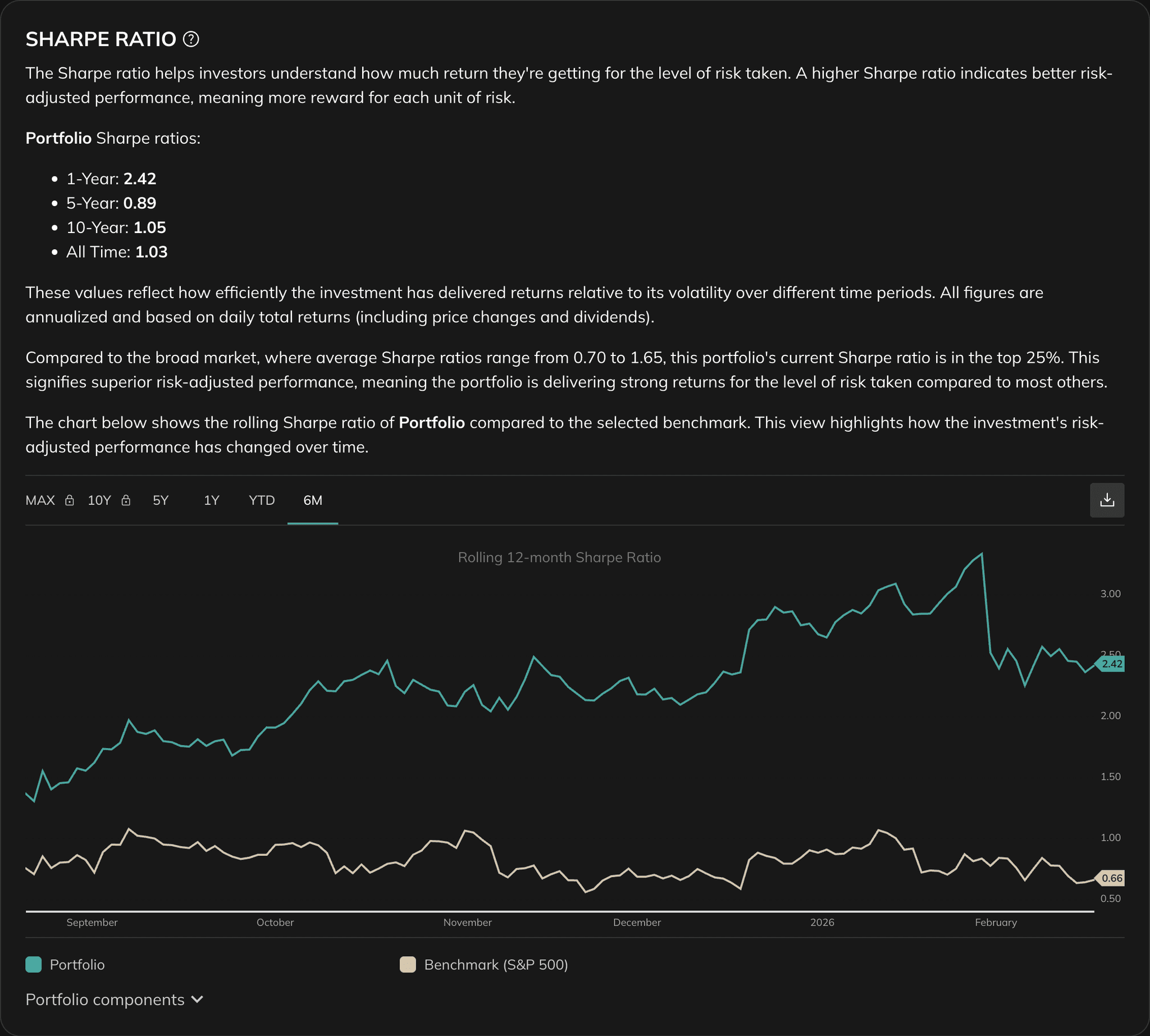
- Assess risk-adjusted returns using Sharpe, Sortino, Omega, Calmar, and other ratios
- Explore monthly returns and dividends
- Review asset allocation and diversification across asset types
- See how your portfolio ranks against others on PortfoliosLab based on key performance factors
- Analyze correlations between assets to understand diversification and risk exposure
- Compare your portfolio with a benchmark to see how it performs against the market
A portfolio can look strong on total return but still have weak risk-adjusted quality, poor diversification, or deep drawdowns. Portfolio Analysis helps you evaluate the full picture before making decisions.
How to Use the Portfolio Analysis Tool
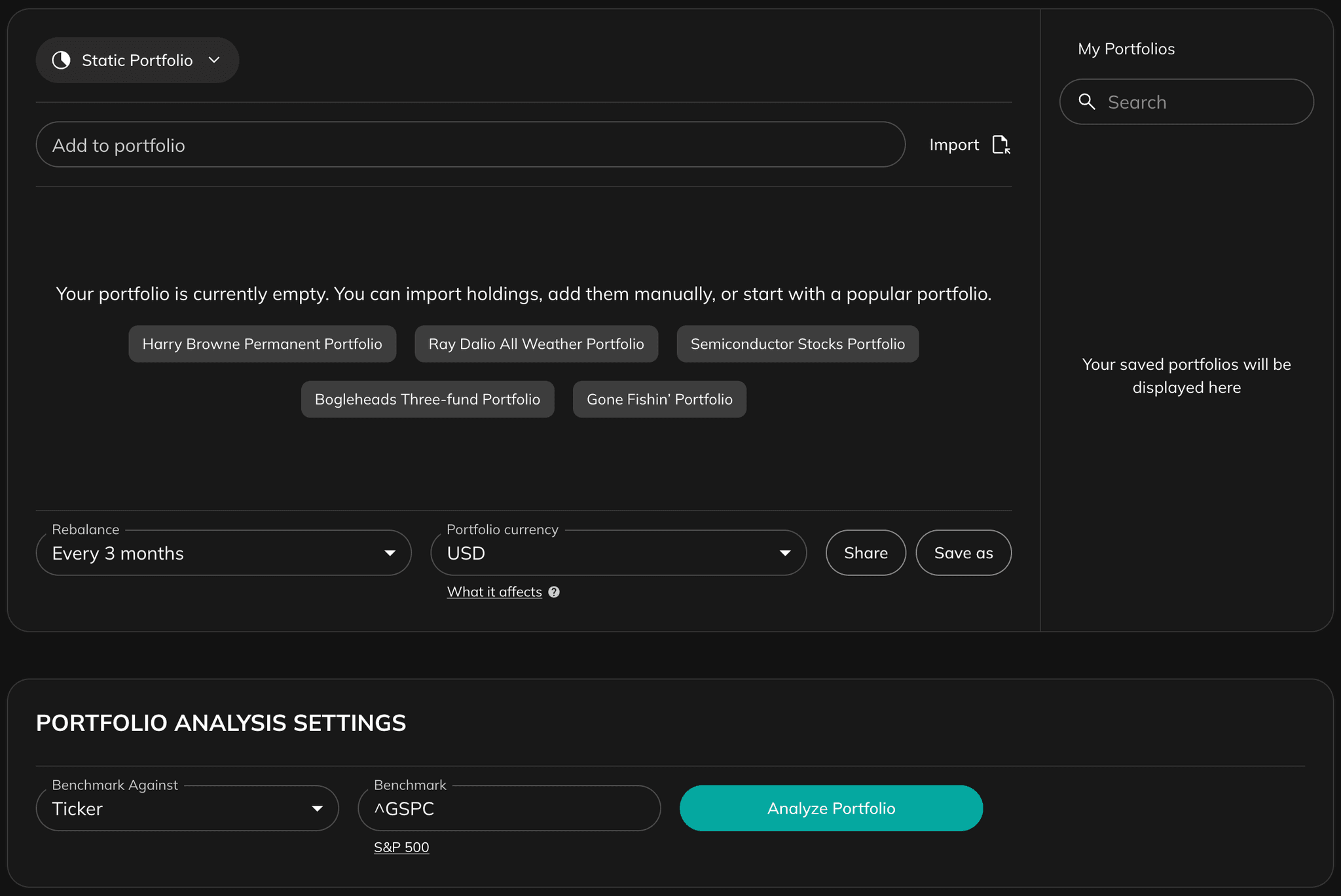
1
Build or Select Your Portfolio
Add your portfolio manually, upload holdings, or select a saved setup in the portfolio selector.
2
Set a Benchmark
Choose a benchmark to compare your portfolio against a relevant market reference.
3
Set the Return Hurdle
Enter an annualized risk-free rate or Minimum Acceptable Return (MAR), then confirm symbols, allocations, and portfolio settings.
4
Analyze Portfolio
Click "Analyze Portfolio" to generate the complete result view.
5
Read Results by Section
Interpret performance, risk-adjusted return, dividends, drawdowns, volatility, and diversification together.
Practical Tip
Use more than one benchmark to stress-test the same portfolio under different market references.
Tool Settings
Portfolio Analysis has two direct settings controls and several context inputs that shape interpretation:
Benchmark
Defines the baseline for relative return and risk comparison across all major sections.
Risk-free Rate / MAR
Sets one annual return hurdle for risk-adjusted metrics. Sharpe, Calmar, and Martin subtract it from return; Sortino and Omega use it as MAR.
Portfolio Composition
Selected positions and weights drive every metric and chart.
Rebalancing Setup
Rebalancing behavior can materially change long-term performance path and risk characteristics.
Currency Context
Portfolio values and comparisons should be interpreted in the selected currency context.
If required inputs are missing (for example, invalid positions or benchmark issues), validation prevents calculation until the setup is corrected.
Results: Section-by-Section Guide
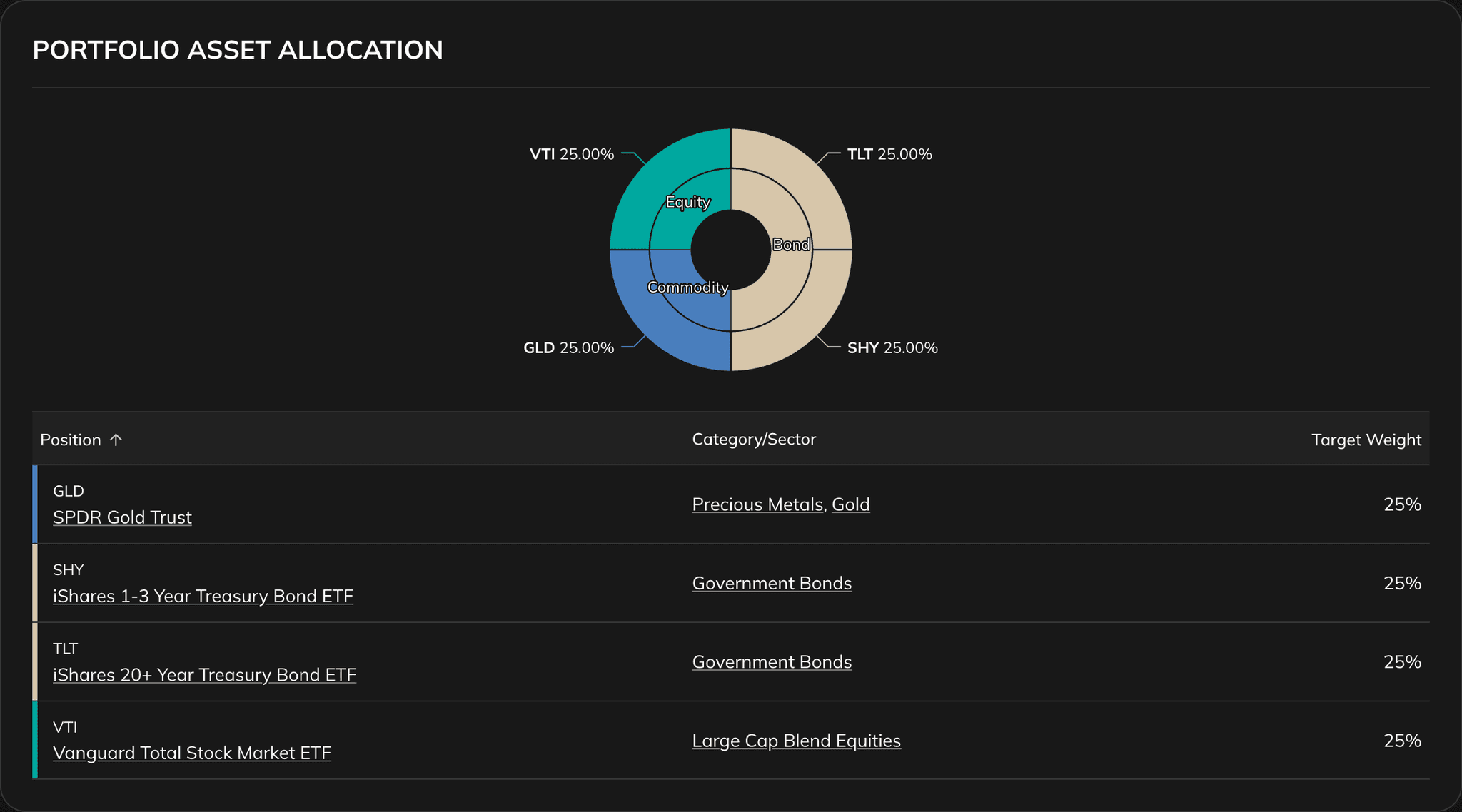
1. Portfolio Asset Allocation
This section shows how capital is distributed across holdings. It helps you quickly identify concentration risk and whether allocations match your intended strategy.
Focus on:
- Overweight positions that dominate portfolio behavior
- Hidden concentration by sector/theme
- Allocation drift versus your target plan
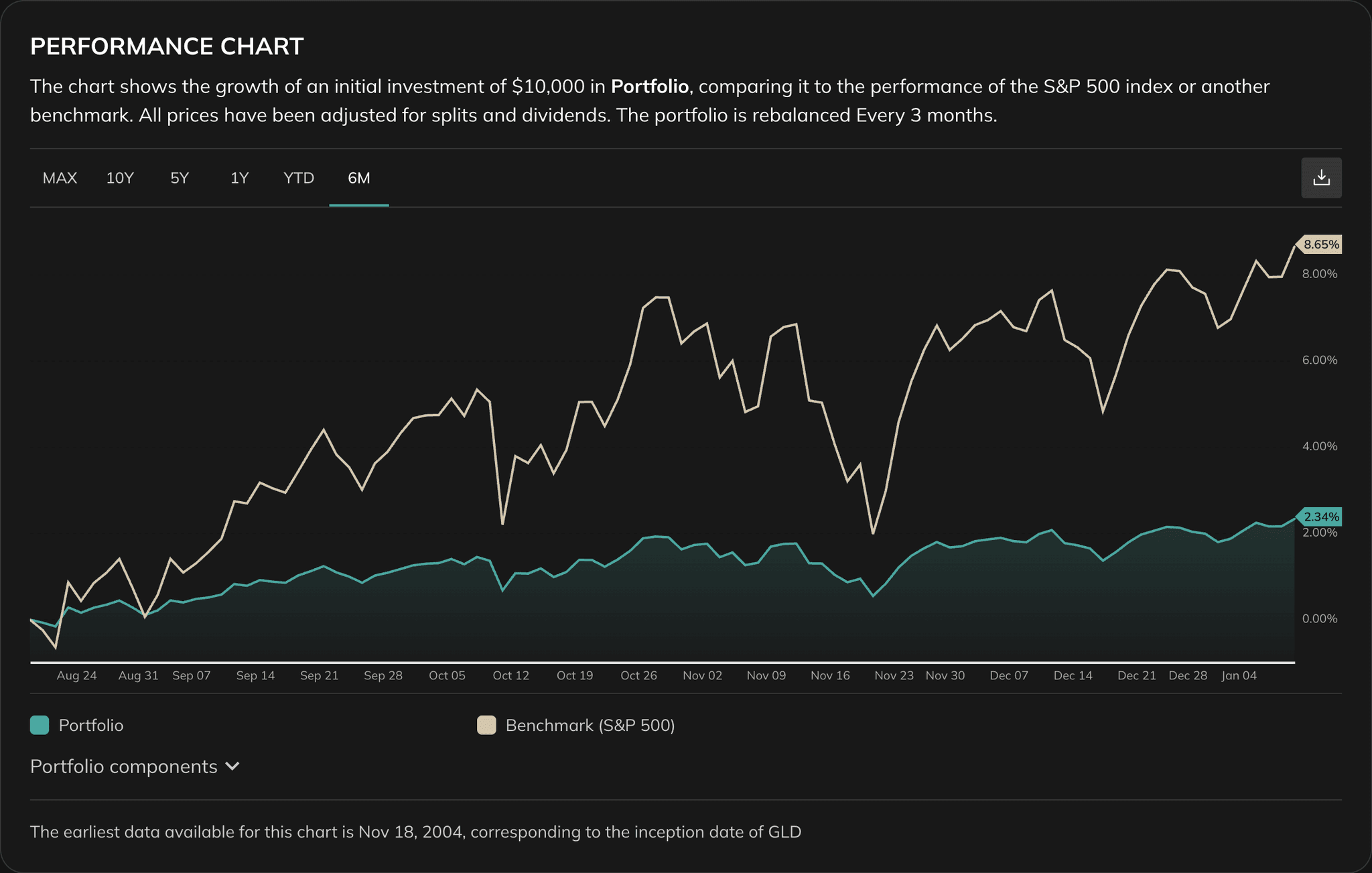
2. Performance
The Performance section is your top-level return view. It includes growth behavior over time and core return context to understand how the portfolio actually compounded.
What to check:
- Shape of the equity curve, not only final return
- Relative behavior vs benchmark across different periods
- Whether outperformance is consistent or concentrated in short windows
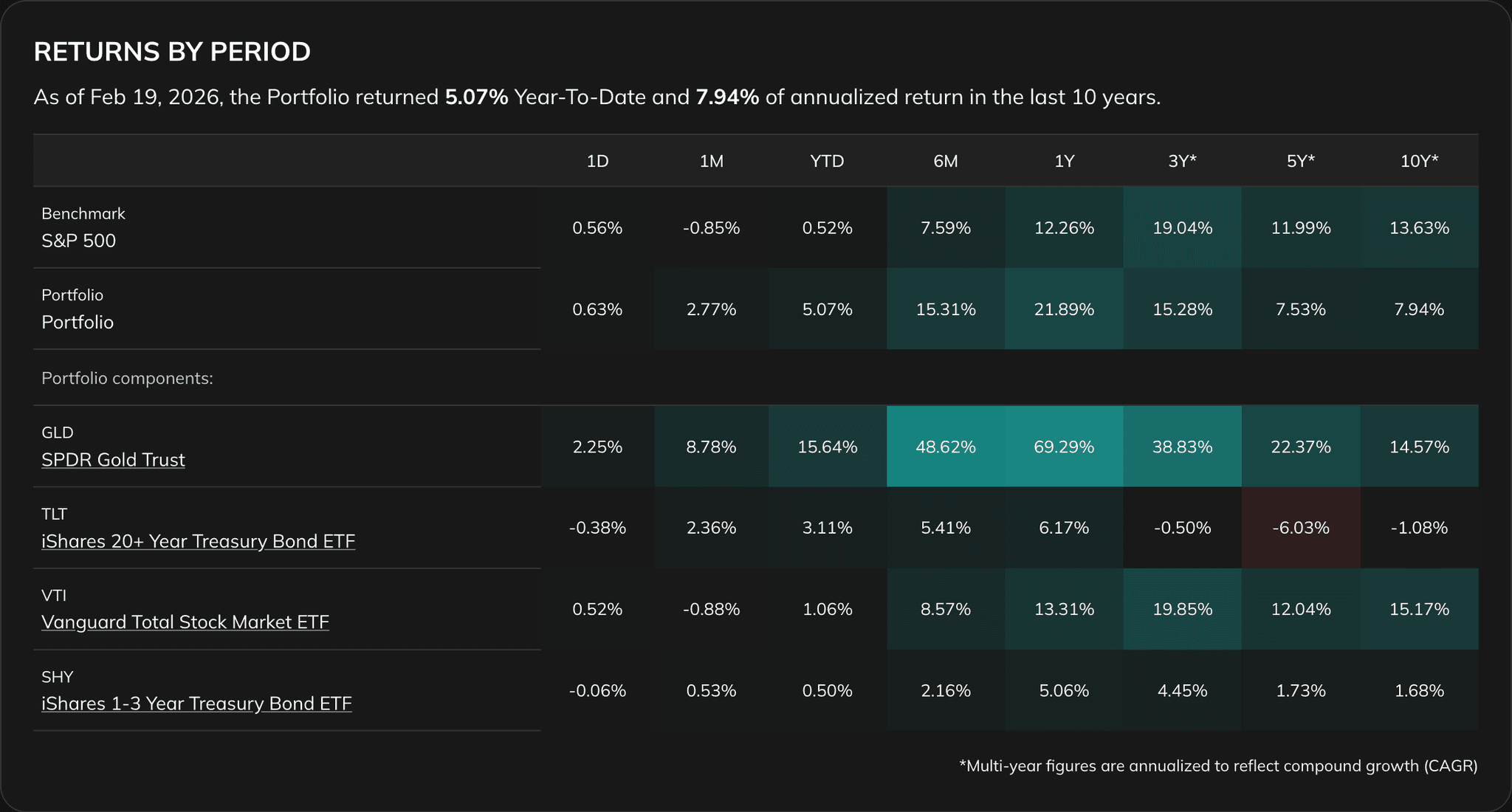
This part adds depth to the performance story:
Returns by period: Structured period-by-period return view. The returns by period section shows the return for each period in the portfolio. It is useful for checking the return for each period in the portfolio and how it compares to the benchmark.
Returns heatmap: Monthly consistency and regime behavior. The returns heatmap section shows the return for each month in the portfolio.

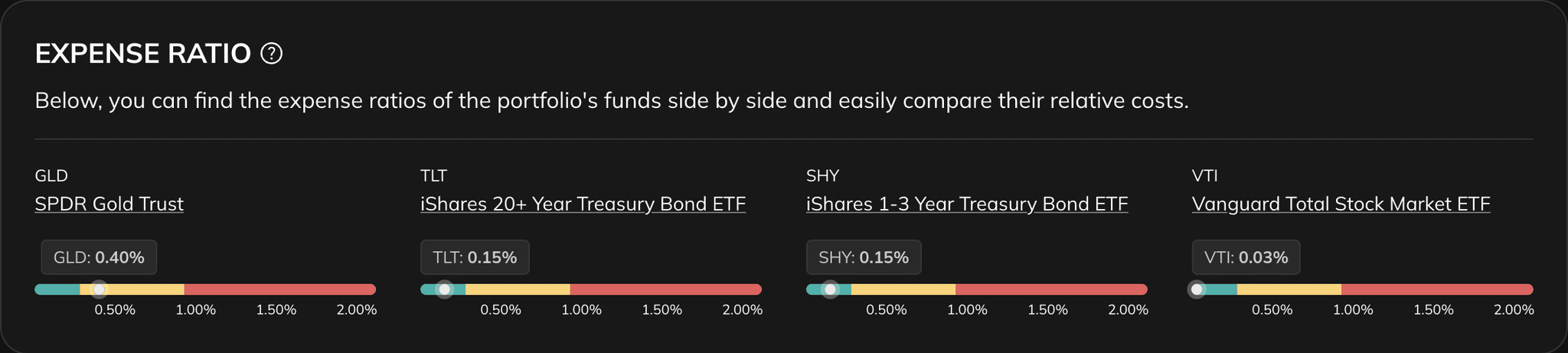
Expense ratio Cost drag that affects long-term compounding. A fund's expense ratio is the annual fee—expressed as a percentage of its allocation in an investor's portfolio—that the fund charges for its management and operation. Lower expense ratios generally result in higher net returns for investors.
4. Return for Risk
Risk / Return Rank

Return / Risk — by metrics
Sharpe Ratio
5. Dividends
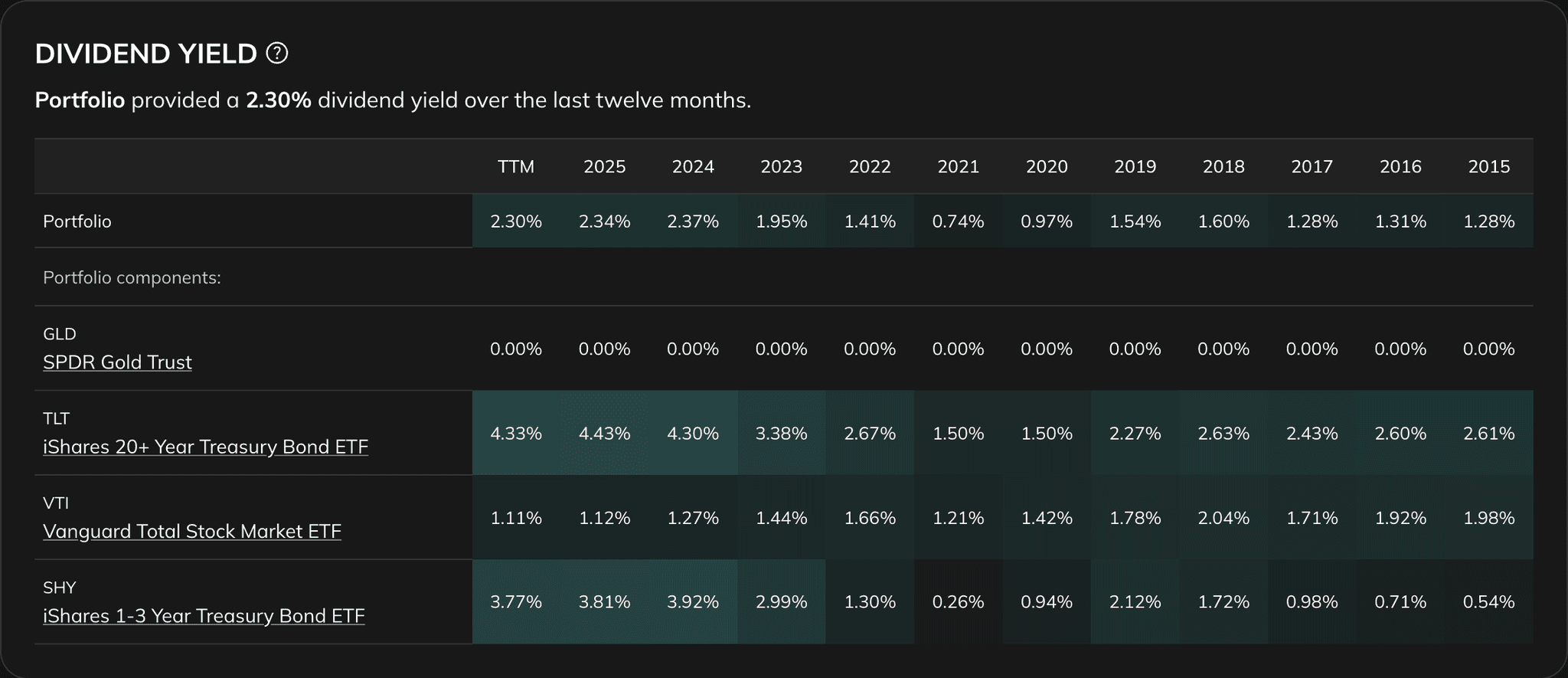
The dividend yield represents the profit an investor would have received if they had held the investment over the specified period. It is calculated by dividing the sum of any income distributions during that period by the market price at the end of the period.
What to evaluate:
- Stability of income over time
- Dependence on a small number of dividend payers
- Alignment of income profile with your portfolio objective
6. Drawdowns
Drawdown is a risk measure that shows how deep an asset or portfolio has fallen from its maximum and how long it has taken to recover.
Use this section to evaluate how severe losses get and how long recovery takes.
Read the Drawdowns tool documentation for more details.
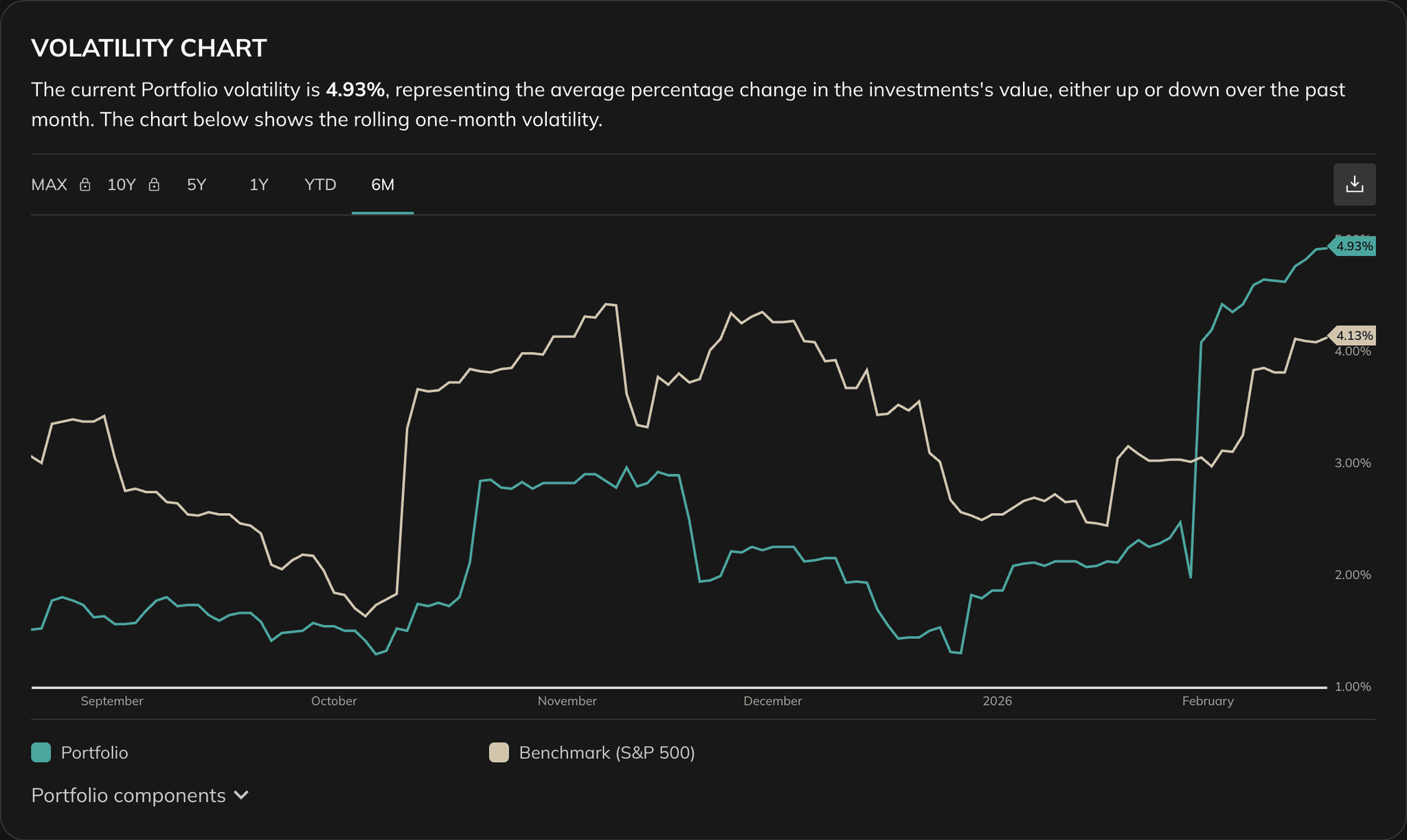
7. Volatility
Volatility measures return variability and risk stability over time. See Understanding Volatility for a detailed explanation of what volatility means and how it affects portfolio behavior.
Watch for:
- Regime shifts in volatility level
- Prolonged high-volatility windows
- Alignment between realized volatility and your risk tolerance
8. Diversification (Correlation)
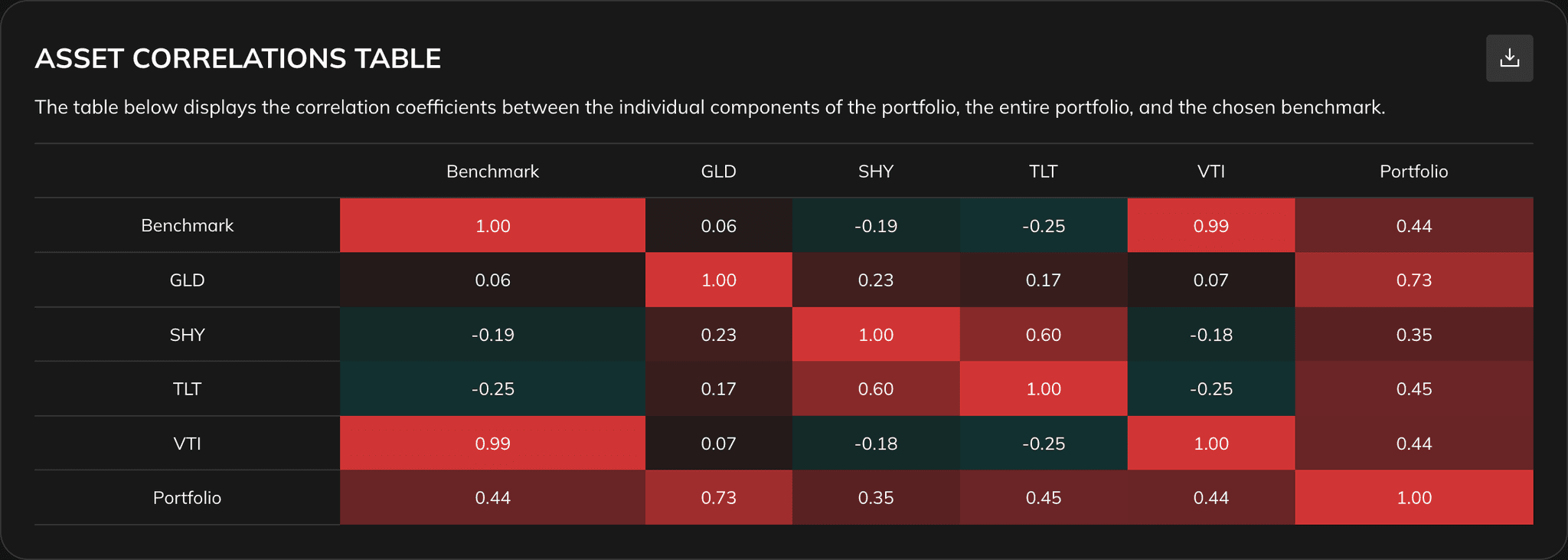
When multiple assets are present, this section helps assess diversification quality via correlation.
Interpretation guidance:
- High positive correlation clusters reduce diversification benefit
- Lower or negative correlations can improve resilience
- Use correlation together with drawdowns and volatility for stronger risk diagnostics
Interpretation Framework
Avoid optimizing one metric in isolation. The strongest portfolios usually combine reasonable return, manageable drawdowns, efficient risk-adjusted metrics, and genuine diversification.
Common Mistakes to Avoid
Focusing only on cumulative return
Pair return with drawdowns, volatility, and risk-adjusted metrics.
Using an irrelevant benchmark
Benchmark mismatch can make relative conclusions misleading.
Ignoring correlations
Many positions do not guarantee diversification if assets move together.
Overreacting to short windows
Use multiple market regimes before making allocation changes.